I make your company more profitable.
A cost that disappears, a process that stops getting stuck, revenue you weren’t capturing: you hire me for the result. The software that gets you there I build myself, fast, with AI.
Anyone can build software today. What I deliver is the problem solved and the opportunity found: outcome as a service, instead of software as a service.
The first step is free. Two one-hour conversations on different days. The solution I bring to the second one is yours to keep, whether or not you hire me.

Does this happen at your company?
Most of the money a company can save or earn is hiding in routine work. These are the problems I hear most, and what changes once each one is solved.
-
“We type the same data into three different systems.”
Data typed once, and the retyping errors gone
An integration makes your systems talk to each other, so the hours spent retyping go back to the work that matters.
-
“The real process lives in a spreadsheet only one person understands.”
The process keeps running when that person is on vacation
A small app with the rules built in: clear steps, permissions and history, instead of knowledge locked in one head.
-
“Every week someone loses an afternoon putting the same report together.”
The afternoon back, and decisions made on current numbers
A dashboard fed straight from your systems puts the numbers in one place, always up to date, without anyone copying them by hand.
-
“There’s money in this idea, but nobody has time to test it.”
You learn whether the idea makes money before spending the budget
Real users try a clickable prototype first. The product gets built only if the idea holds up; if it doesn’t, you found out cheaply.
-
“Off-the-shelf software makes us work its way, not ours.”
Your team works its own way again, not the software’s
Only the screens and steps you use, in your own vocabulary, connected to the tools the company already has.
How it works
The first step toward the result is two free conversations: I find where the gain is and write down how to get it. After the second one, you decide whether to go ahead. You work directly with me the whole way.
-
First conversation free, 1 hour
You tell me what’s going on. I ask about the process that weighs most: who does what, in which systems and spreadsheets, and where the hours go.
-
Second conversation free, 1 hour
On another day, I bring the solution, written on a sheet like this one. It’s yours to keep, whether or not we work together.
The solutionFor one process, mapped with your team
- How it works today
- Who does what, in what order, in which systems and spreadsheets.
- Where it leaks
- Hours, rework and errors, and where each one comes from.
- What to build first
- The one change that should pay back soonest.
- What it should return
- The estimate, in hours, errors, cost or revenue.
- How we’ll measure it
- Today’s numbers, written down to compare with later.
If you go ahead, the work is judged by the numbers on that sheet
Prototype
A clickable version your team tries early, while changes are still cheap.
Build
The real software, in small releases, so the result starts to show before the project ends.
Measure
Before and after, on the numbers written down in the second conversation. That’s how we both know it worked.
As an ongoing partner, I keep the software evolving as the business changes. As a single project, the code and documentation belong to your company at the end.
Free. Two one-hour conversations, on different days.
Segfy, 2016–2020. I was CPO and co-founder.
Sectors: insurtechSaaS
The software we built for insurance brokers grew revenue 800%. Then Porto Seguro acquired the company.
The problem
To offer a client the best price, an insurance broker had to type the same details into each insurer’s system, one at a time, and then compare the answers by hand. Time spent typing was time not spent selling.
What we built
Software that runs the broker’s routine in one place: quotes, proposals, policies, commissions, installments, claims and reports. At its core, robots fill in the quote on dozens of insurers at once and bring the prices back side by side. On top of that data we created two more products, Segfy Seguros and Segfy Analytics.
I turned the company’s strategy into product, led the discovery and delivery teams, and took part in buying three other companies: Cotak, Villa IT and Leosoft.
The result
- 5M+
- quotes a month
- 800%
- revenue growth
- 50+
- people on the team
Porto Seguro, Brazil’s largest insurer, acquired Segfy.
Does your team retype the same data into several systems? That’s where I’d start looking. Book a free assessment


What people who worked with me say
Public recommendations from my LinkedIn profile, shortened.
-
“In my time working with Renato at Netdata, he proved himself to be a strategic visionary […]. Renato approaches products and projects with a holistic and clear analysis, in a method that could help any company or product develop at any stage.”
David ShreveOperations Director, Support and Knowledge, at Sherwin-WilliamsWorked with me at Netdata, on another team. August 2022. -
“Renato is a pleasure to work with! Not only does he bring an enthusiastic approach to any project he’s given, he’s hard working and proactive […]. I’d gladly work with Renato again in the future.”
Jennifer McFarlandProduct marketing professionalWas on my team at Netdata. July 2022. -
“Renato carrega consigo um forte mindset empreendedor. Sua comunicação clara e sua criatividade […] fazem diferença no dia a dia de qualquer equipe. Trabalhei com ele por 3 anos […]. Ele tem uma habilidade notável de estimular inovação e manter todos alinhados em torno dos objetivos do produto.”
English translation
“Renato carries a strong entrepreneurial mindset. His clear communication and creativity […] make a difference in the day-to-day of any team. I worked with him for 3 years […]. He has a remarkable ability to spark innovation and keep everyone aligned around the product’s goals.”
Célio JúniorSystems analyst and full-stack developerWas on my team for 3 years. June 2026.
Other problems I’ve taken on, and what changed
Each one started from a problem and was judged by a number someone tracked. We’ll agree on yours before building anything. Open any of them to see the problem, what I did and what changed.
- 1,500+occupational therapists use it Mirabilis, a clinical appProduct and development, todaySectors: healthtechSaaS
- 30,000+ideas and projects in year one Open innovation platformHead of Product, 2022–2024Sectors: innovationSaaS
- 7,000+heavy machines monitored Tracbel, remote machine monitoringHead of Product, 2022–2023Sectors: industry
- 1.2M+servers connected Netdata Cloud, infrastructure monitoringSenior Product Manager, 2021–2022Sectors: infrastructureSaaS
- 400municipalities with pharmacies on the platform ClinicaRX, health services in pharmaciesChief Product Officer, 2020–2021Sectors: healthtechSaaS
- R$770M+for Latin America’s largest builder Digital products for home buyersProduct leader, 2020Sectors: real estate
- 150,000+t-shirts designed Montink, print-on-demand marketplaceFounder, 2013–2017Sectors: marketplacee-commerce
- 853municipalities reporting online Social assistance monitoring for Minas GeraisProduct manager at Adok, 2008Sectors: govtech
- 2,000+online stores BNW, e-commerce platformCOO and co-founder, 2004–2016Sectors: e-commerce
Before product leadership, I ran Adok, a custom software company, as CEO and CPO from 2004 to 2013, building systems for universities and the Minas Gerais state government. I also co-founded seven startups whose business model didn’t hold up. They taught me to test before building.
- Education
- BSc in Computer Science and a postgraduate degree in Strategic Business Management, both at UFMG
- Teaching
- Since 2015, entrepreneurship for Computer Science students at UFMG
- Community
- Co-founded Orbi Conecta; mentor at Founder Institute and SEED/MG
- Recognition
- Best entrepreneurship course in Brazil, Case Startup Awards 2017 and 2018; Best Startup to Invest In, Boost Accelerator 2018
Who you’ll be working with
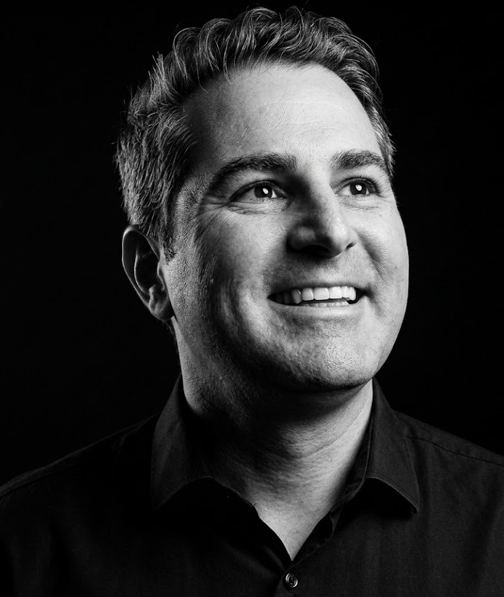
I studied Computer Science and wrote code for a living before spending two decades on the business side of software, founding companies and leading product at the ones listed above.
I can talk margins with the CEO in the morning and review a data model in the afternoon. With AI, building the software has become the fast part; the result comes from understanding the business first. So I start from what your company needs to gain, and only then decide what to build.
Today I build Mirabilis, a clinical app for the occupational therapists at Instituto ISC. It is the same work I offer you: understand how a team really works, find what holds it back, fix it and watch the numbers.